


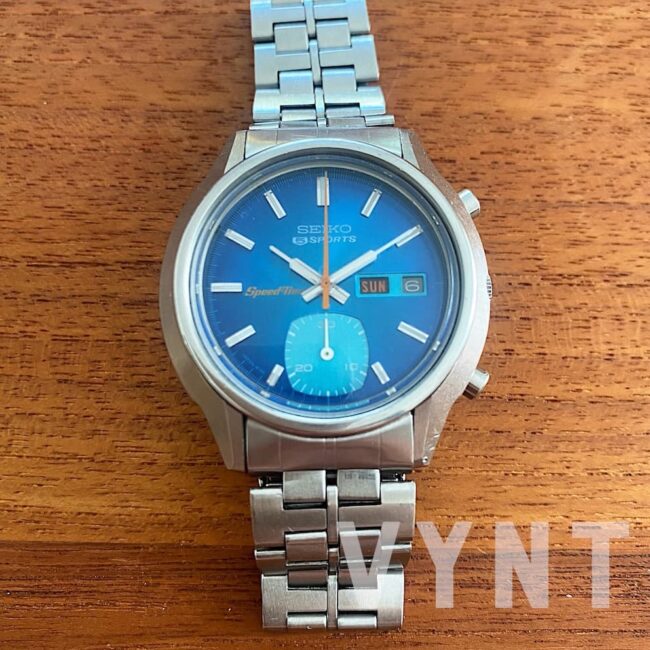
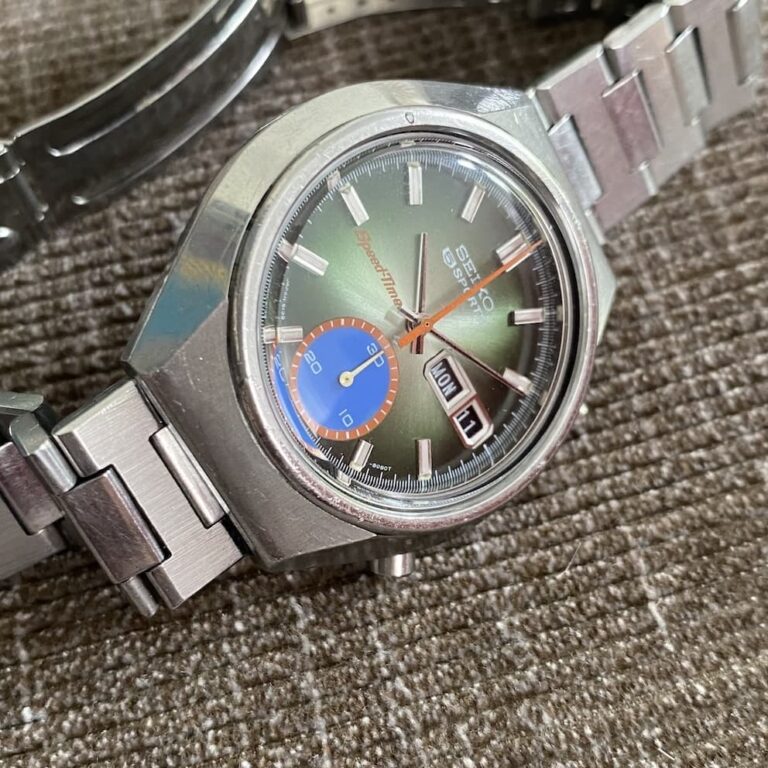
Seiko 5 Sports 6139-7060 Speed-Timer Chronograph
written by Mads
September 19, 2025
Some links on this page may be affiliate links. If you purchase through them, I may receive a small commission at no additional cost to you.
A Collector’s Guide to One of the Most Colorful Seiko Chronographs
Among vintage Seiko chronographs, the 6139 family holds a special place. Introduced at the end of the 1960s, these watches represent one of the earliest automatic chronographs ever produced and quickly became a cornerstone of Seiko’s reputation for technical innovation.
Within this family, the 6139-7060 stands out for a different reason: variety.
While some references in the 6139 lineup were relatively straightforward, the 7060 was offered in multiple dial variations, different handsets, and both JDM (Japan Domestic Market) and export versions. In total, collectors today recognize five distinct versions of the watch. Interestingly, only one of these versions was officially intended for the global market. The remaining four were reserved for Japan, where Seiko often experimented with bolder colors and more expressive dial designs.
Quick facts
Reference: Seiko 6139-7060
Production: early 1970s
Movement: Seiko 6139B automatic chronograph
Case Size: ~40 mm
Lug Width: 19 mm
Bracelet: XAA871
Market: JDM + Export
Models and Versions
A total of five versions of the Seiko 6139-7060 are known today. Only one was produced for international markets, while the remaining four were Japan-only releases.
This split reflects a broader pattern seen throughout the Seiko catalog of the 1970s. Export models were often conservative in design, while the Japanese market received more adventurous colors and dial layouts.
The result is a fascinating contrast:
international buyers received the restrained version, while collectors in Japan had access to the most visually striking variants.
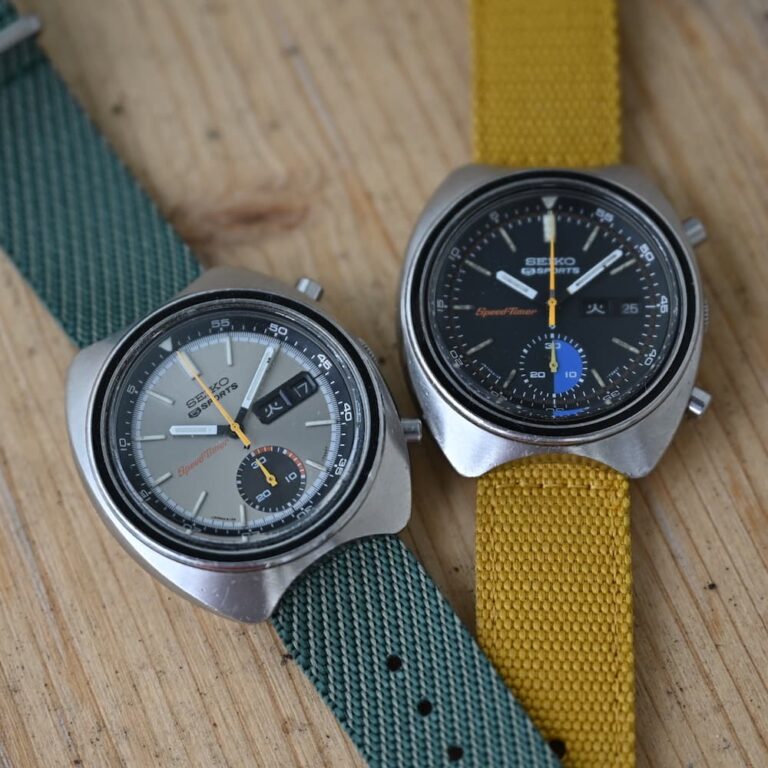
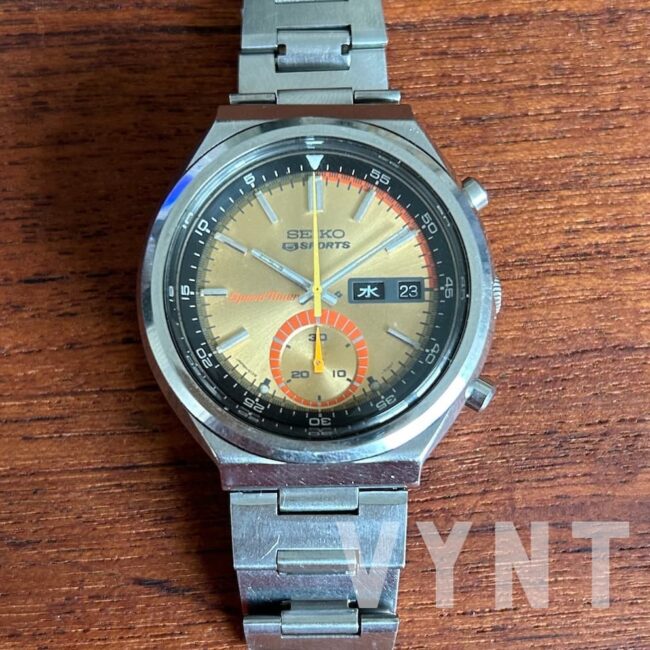
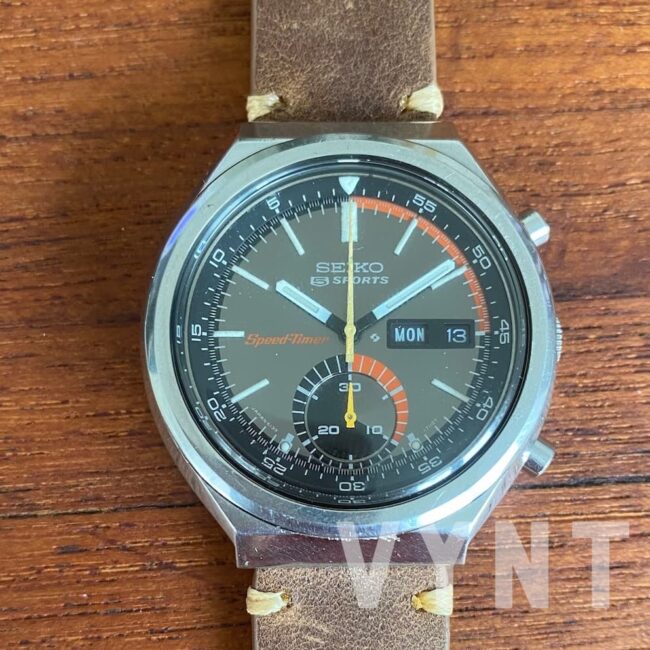
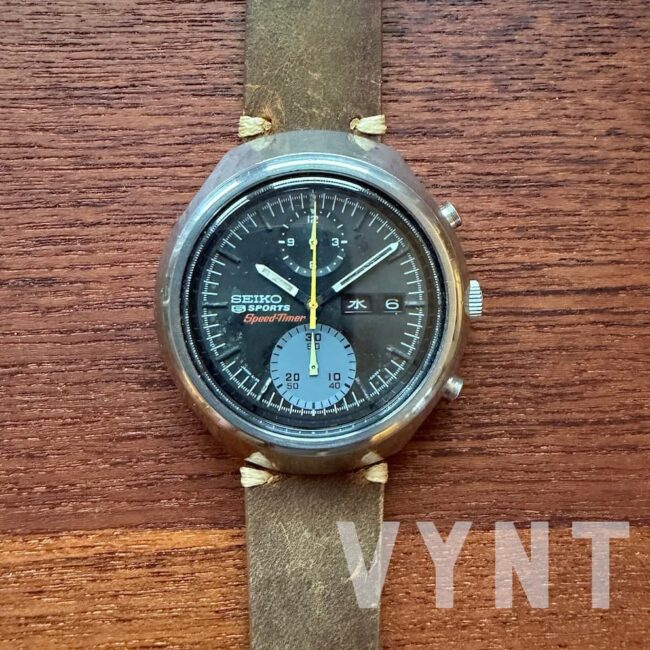
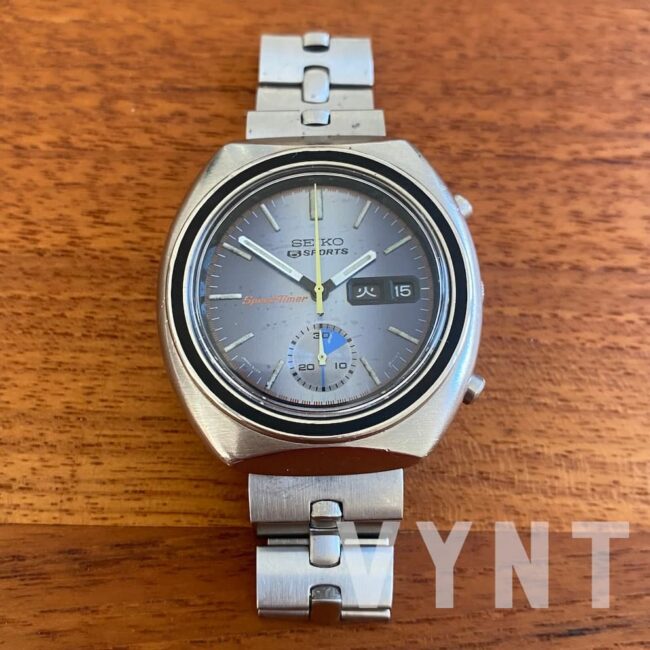
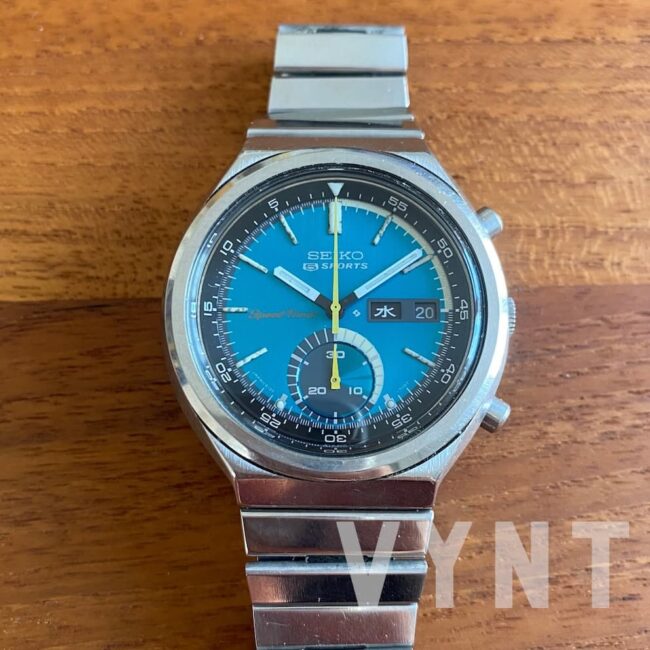
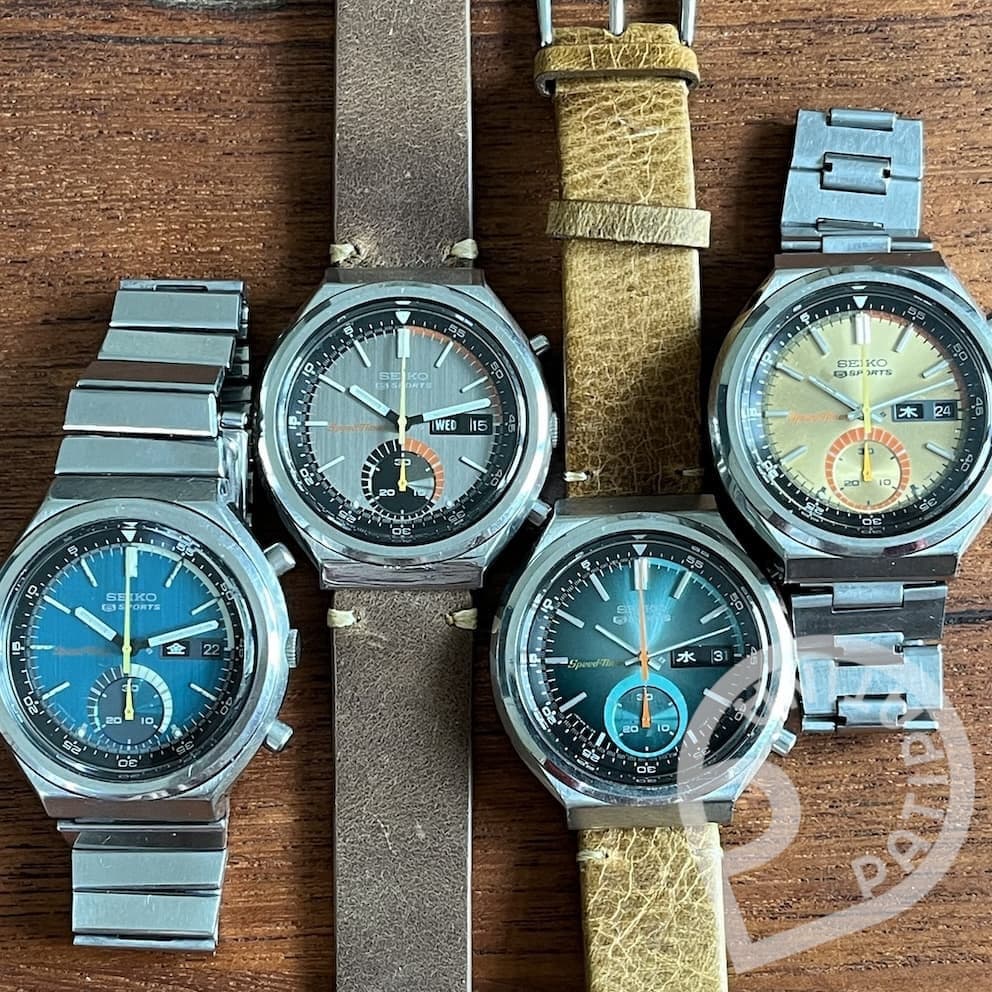
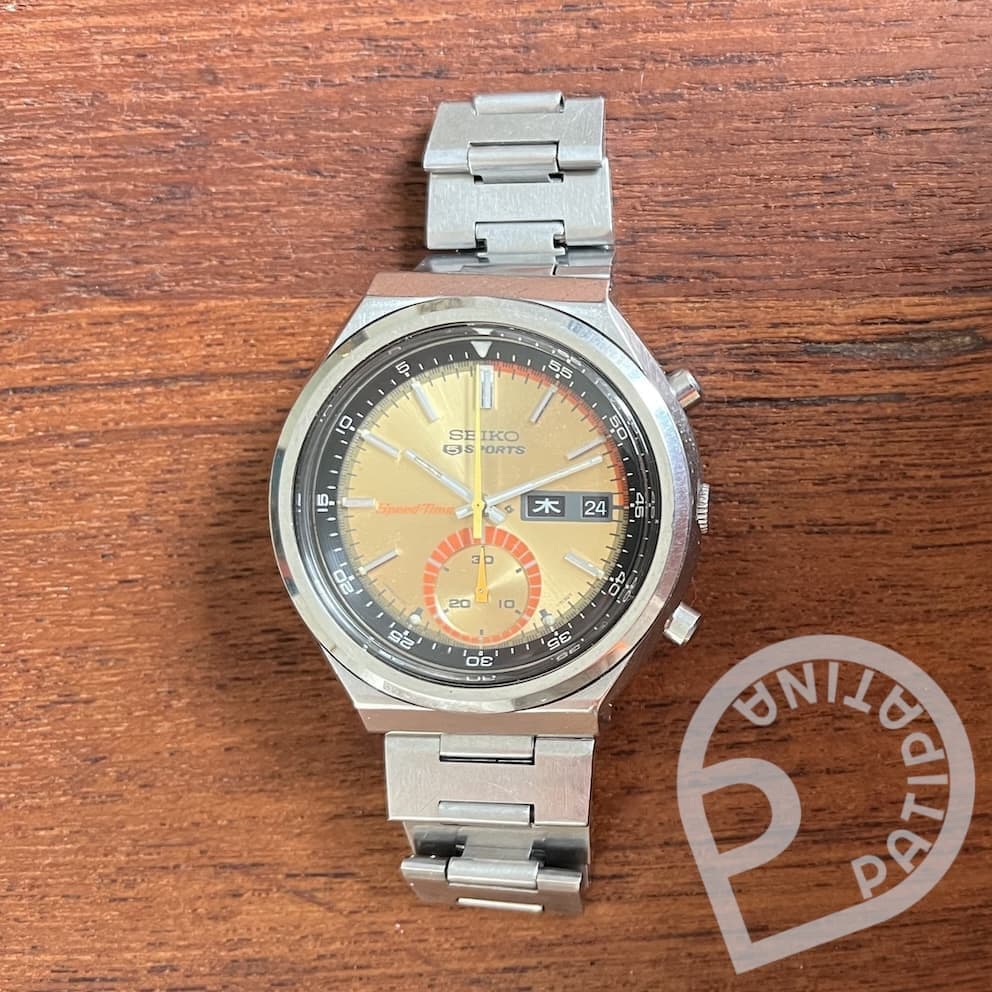
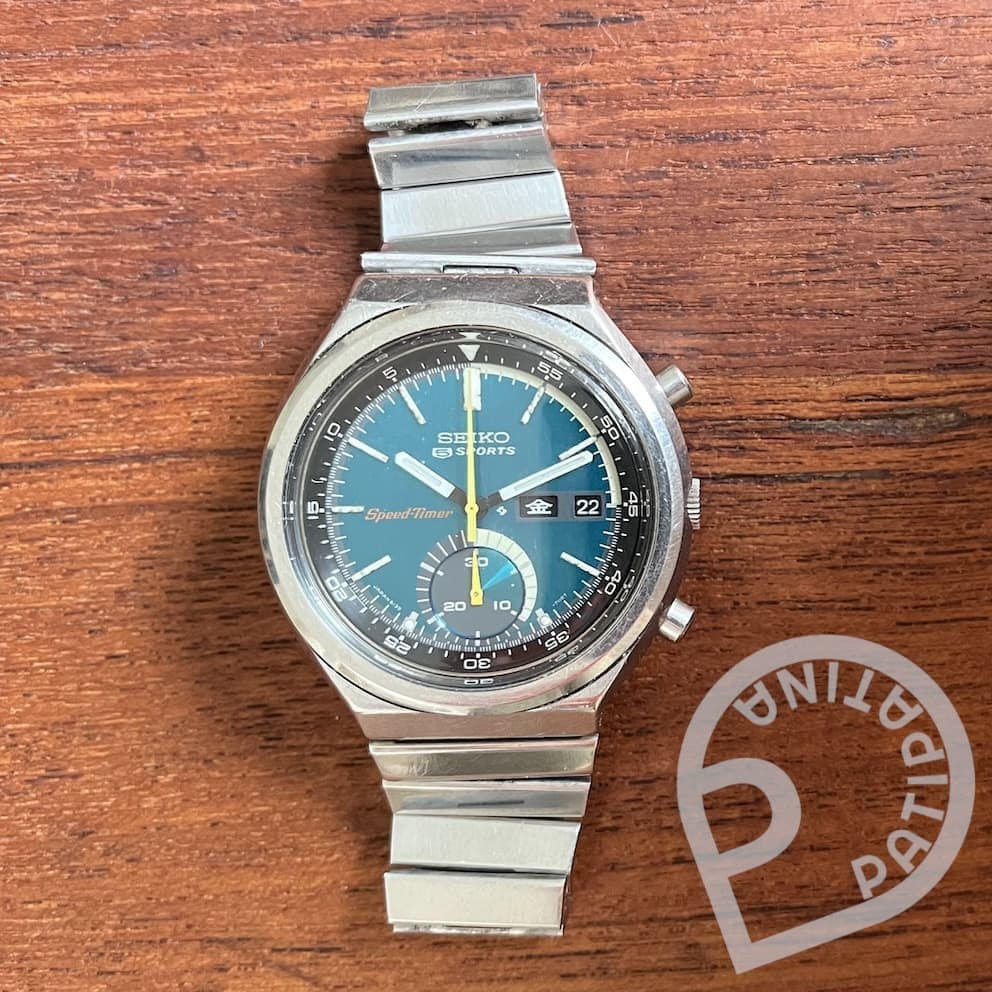
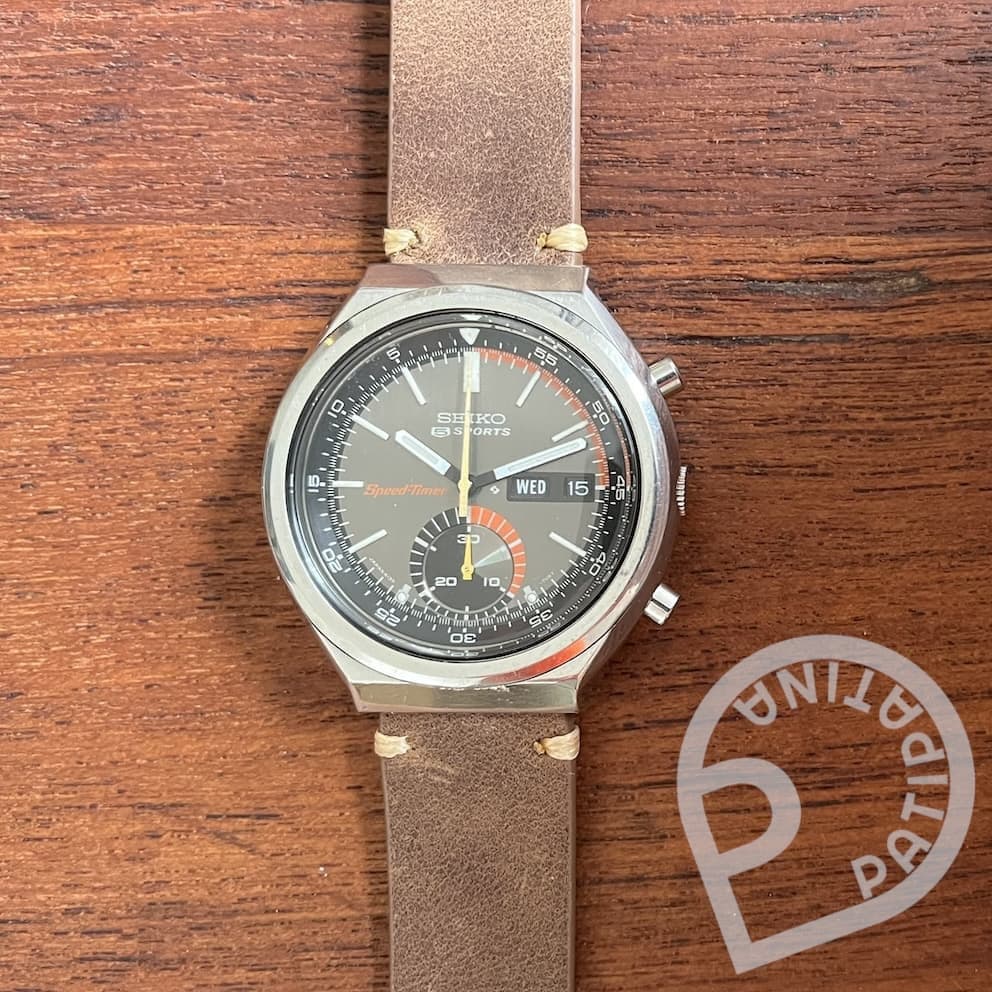
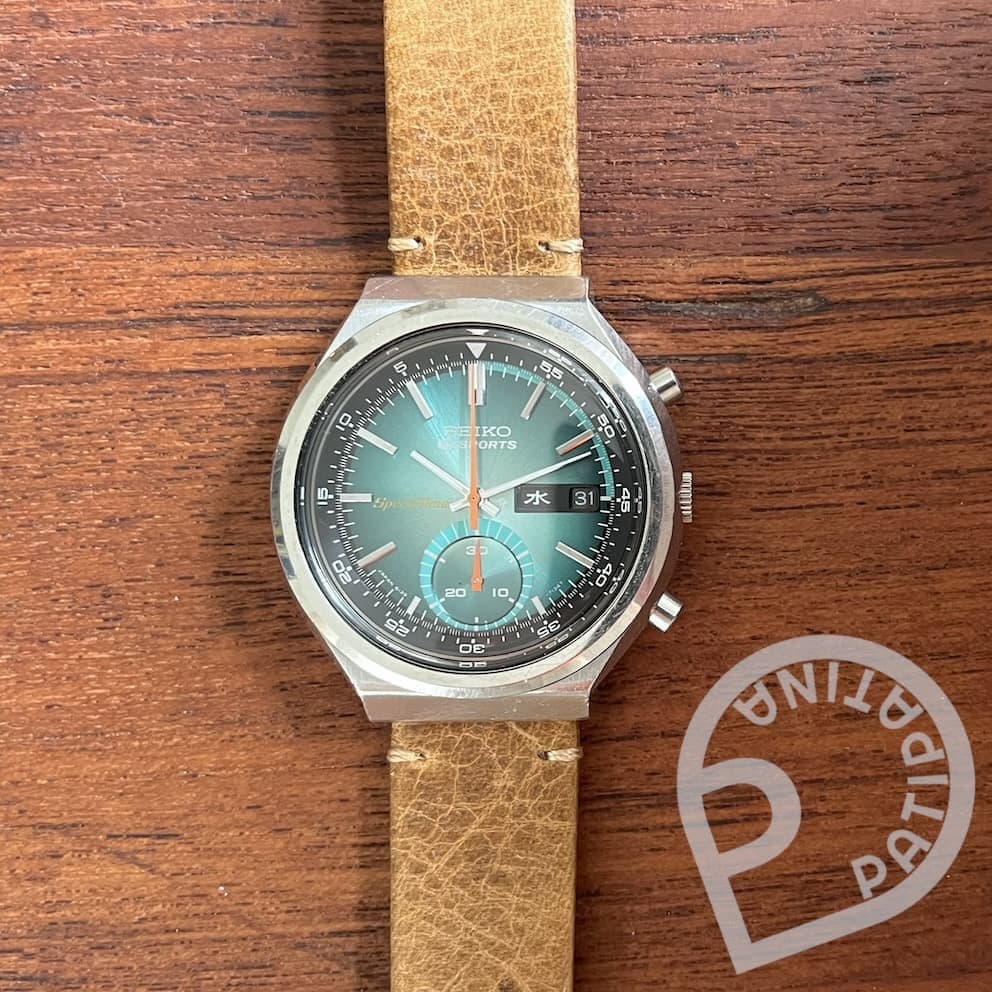
Catalog images of these JDM models are extremely difficult to find today. Rather than reproducing the familiar export catalog photo, I prefer showing the watches as they appear in real life.
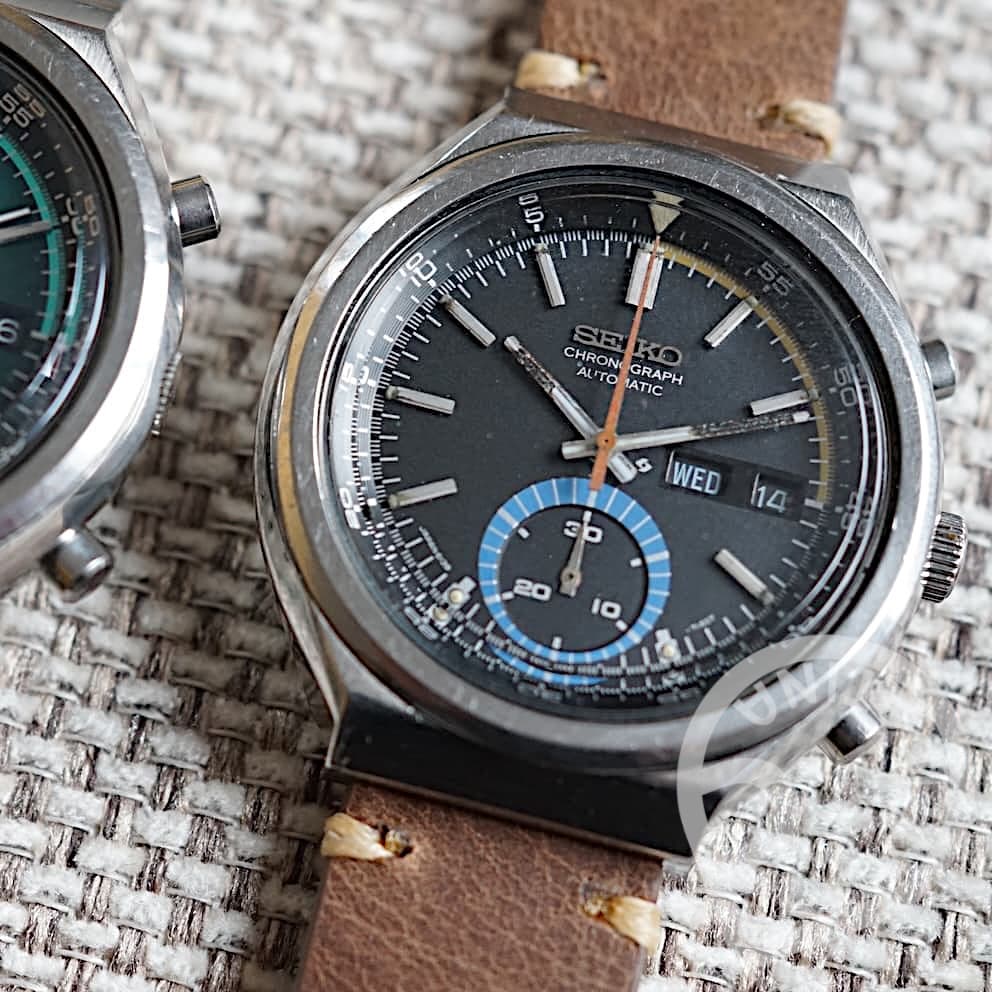
The black export model once passed through my collection, although I eventually let it go. Compared to the vibrant Japanese variants, it simply felt a little too restrained for my taste.
Dial Variations
The export version of the 6139-7060 featured a black dial with a subtle blue sunrise gradient. Elegant and versatile, it was clearly designed to appeal to a wider international audience. Inside Japan, however, Seiko offered a far more adventurous palette.
One of the most striking versions features a gold dial with a red sunrise gradient, creating a warm and festive look that immediately catches the eye.
Another variant combines a green center with a turquoise outer ring, giving the watch a distinctly tropical character rarely seen in chronographs of the early 1970s. Collectors also know a teal or aquamarine version, framed by a vivid yellow gradient that shifts dramatically depending on the light.
Finally, there is a more understated yet sophisticated dial in brown, grey, and beige, accented by a black-to-red gradient that adds a surprising sense of depth.
Together, these five variations illustrate what makes the 6139-7060 so appealing to collectors today:
the same case and movement paired with radically different personalities.
Bracelet
All versions of the 6139-7060 were originally delivered on the same bracelet:
XAA871
This 19 mm stainless-steel bracelet was designed specifically for the case.
Unlike many other Seiko chronographs of the era—where bracelet types varied depending on market or production year—the 7060 family remained consistent in this regard.
The XAA871 balances the bold dial designs with a clean and functional steel aesthetic. Its relatively slim width emphasizes the sporty proportions of the watch, while the tapered links improve comfort and wearability.
For collectors today, finding a 6139-7060 with its original XAA871 bracelet is an important detail that adds to the watch’s authenticity.
Movement
All Seiko 6139-7060 watches are powered by the 6139B automatic chronograph movement.
By the time the 7060 entered production, the earlier 6139A had already been phased out. This means every 7060 left the factory with the updated and more refined B-series caliber.
The movement retains the architecture that made the 6139 famous:
- integrated automatic chronograph
- column wheel chronograph control
- vertical clutch system
This combination placed Seiko years ahead of many Swiss competitors at the time. The 6139B introduced small improvements in durability and serviceability, making the movement better suited for long-term use.
Specifications include:
- automatic winding
- 30-minute chronograph register
- quickset day-date
- robust everyday reliability
For collectors, the fact that the 7060 was produced only with the 6139B simplifies things considerably. There is no ambiguity about early or late movement variants. The watch belongs firmly to the mature phase of the 6139 chronograph story, when the design and mechanics had already reached their refined form.
Final Thoughts
The Seiko 6139-7060 perfectly illustrates Seiko’s approach during the 1970s. Technically consistent on the inside, yet wildly creative on the outside.
For collectors today, the contrast between the restrained export model and the colorful Japanese variants makes the reference particularly interesting. Finding one of the rarer dial combinations can feel like uncovering a small piece of Seiko’s design experimentation from that era. And like many vintage Seiko chronographs, the hunt is often half the fun.
If you are currently searching for one, you can also check whether I have a Seiko 6139-7060 available in my collection.