


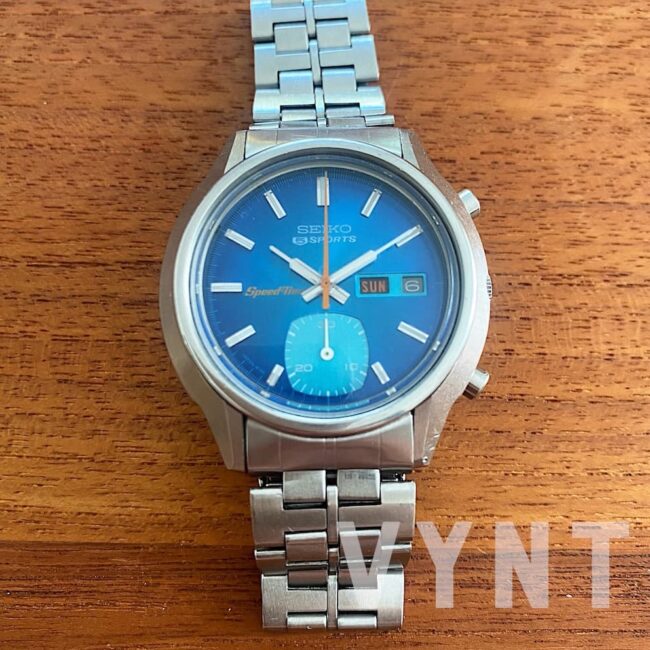
Seiko 5 Sports 6139-7020 Speed-Timer Chronograph
written by Mads
November 23, 2023
Some links on this page may be affiliate links. If you purchase through them, I may receive a small commission at no additional cost to you.
A Collector’s Guide to the JDM “Flying Saucer”
Among the many references in the Seiko 6139 chronograph family, the 6139-7020 is one of the most distinctive. Collectors often refer to it as the “Flying Saucer” or “Apple”, a nickname inspired by its unusual case shape with crescent-style lugs and deep scoops around the bezel.
Unlike many other 6139 models that were produced for both domestic and international markets, the 6139-7020 was created exclusively for Japan. As a true JDM (Japan Domestic Market) model, it carries several small details that immediately set it apart from export references.
For many collectors, the watch represents one of the most interesting design experiments within the early Seiko automatic chronograph era.
Quick Facts
Reference: Seiko 6139-7020
Movement: Seiko 6139 automatic chronograph
Jewels: 21J (JDM specification)
Production: early 1970s
Market: Japan Domestic Market (JDM)
Bracelets: XJA161 / XGA141
Models and Versions
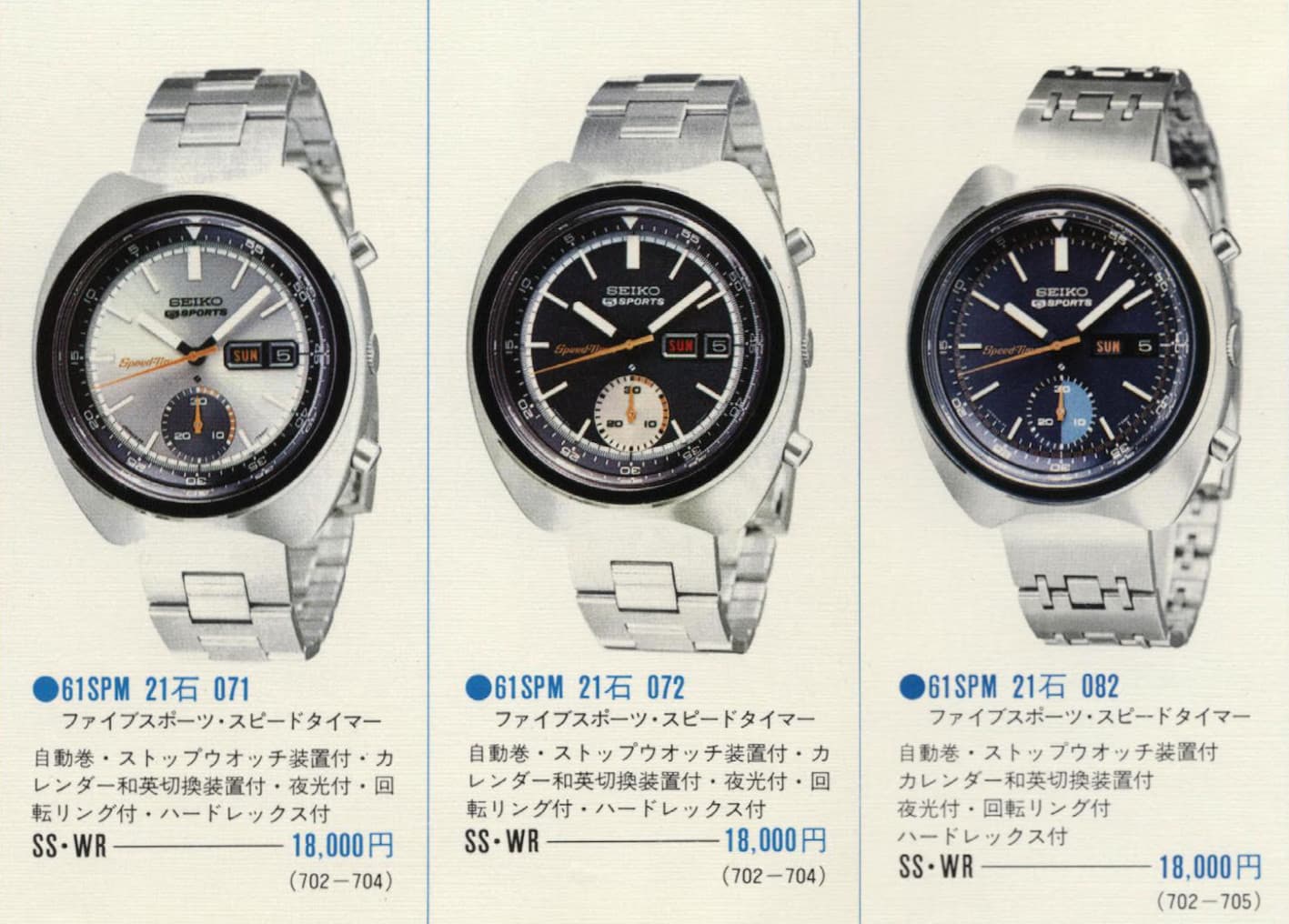
The Seiko 5 Sports Speed-Timer 6139-7020 was released under a single reference number and remained a Japan-only model throughout its production.
Unlike other Seiko chronographs that often had export counterparts with slightly different dial codes or specifications, the 7020 stayed firmly within the Japanese catalog.
All examples share several consistent characteristics:
- 21-jewel movement
- English/Kanji day wheel
- Speed-Timer branding
If you encounter a watch that lacks these details, it may indicate replacement parts or modifications over the years.
This exclusivity is part of what makes the 6139-7020 particularly attractive for collectors today.
Dial Variations
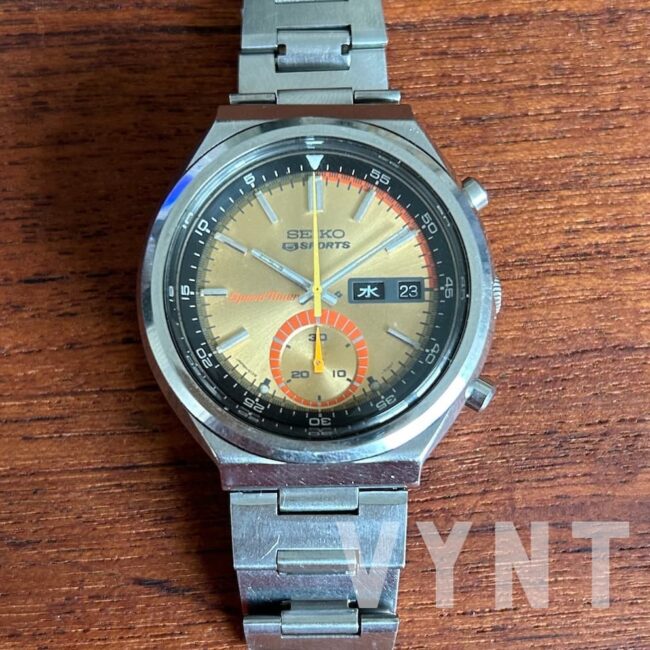
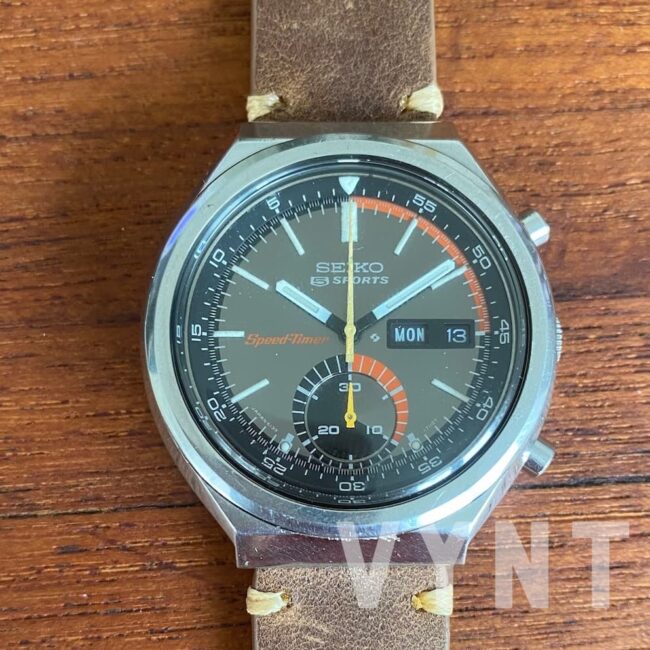
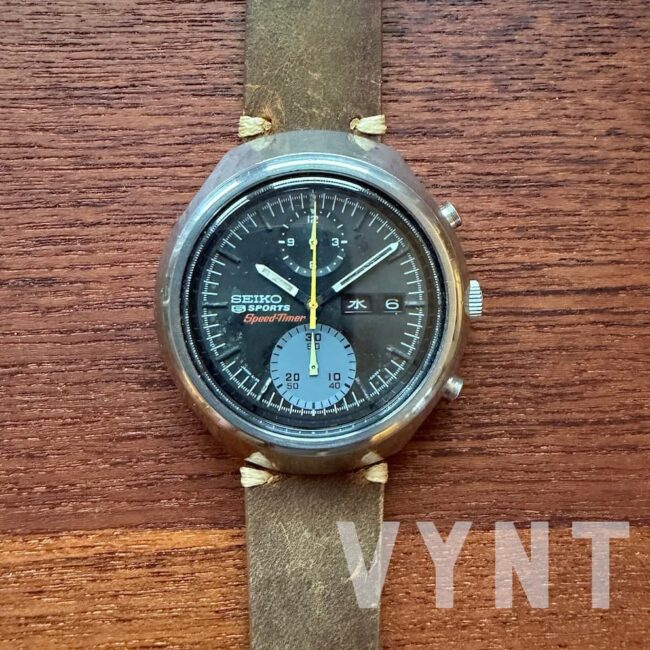
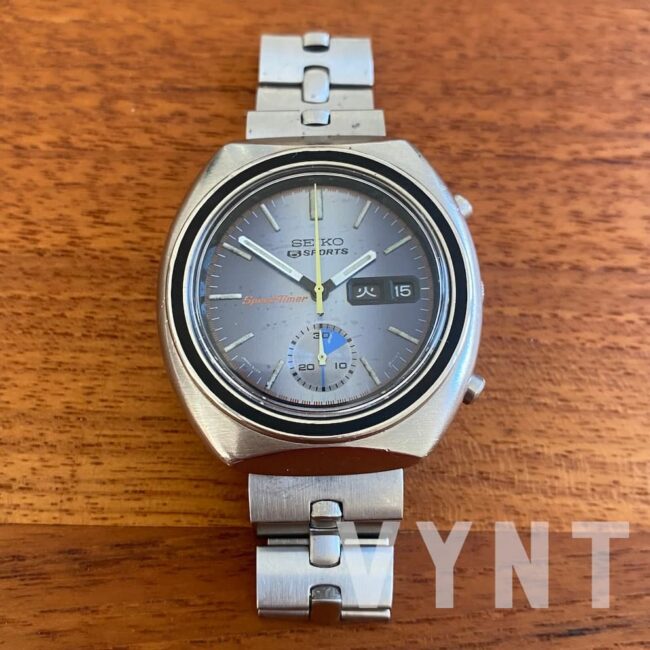
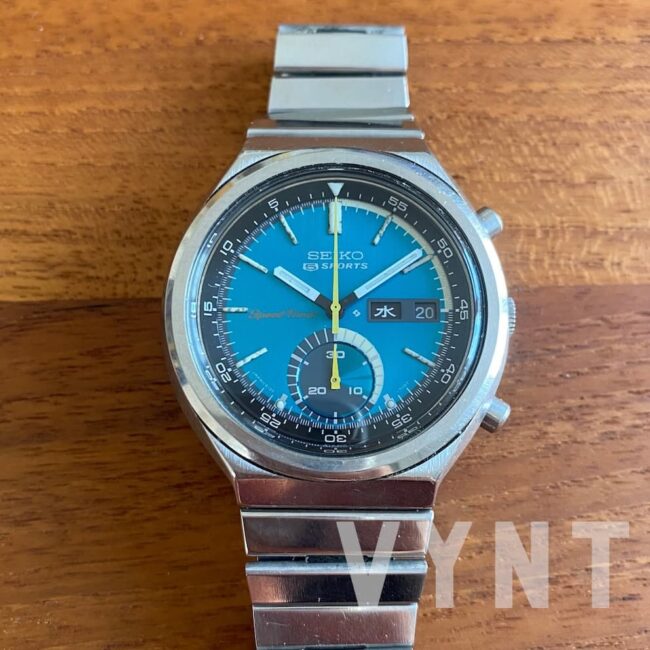
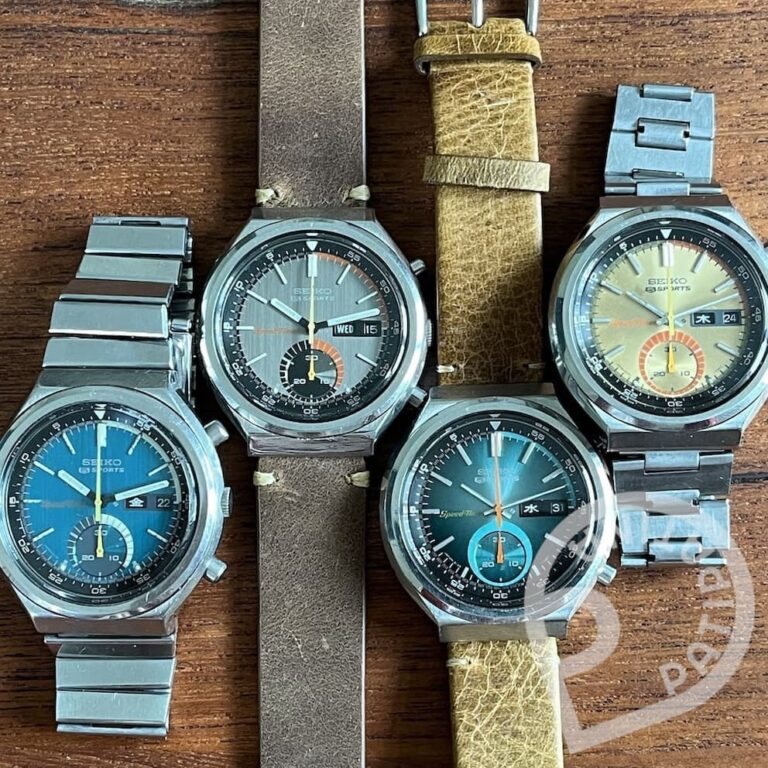
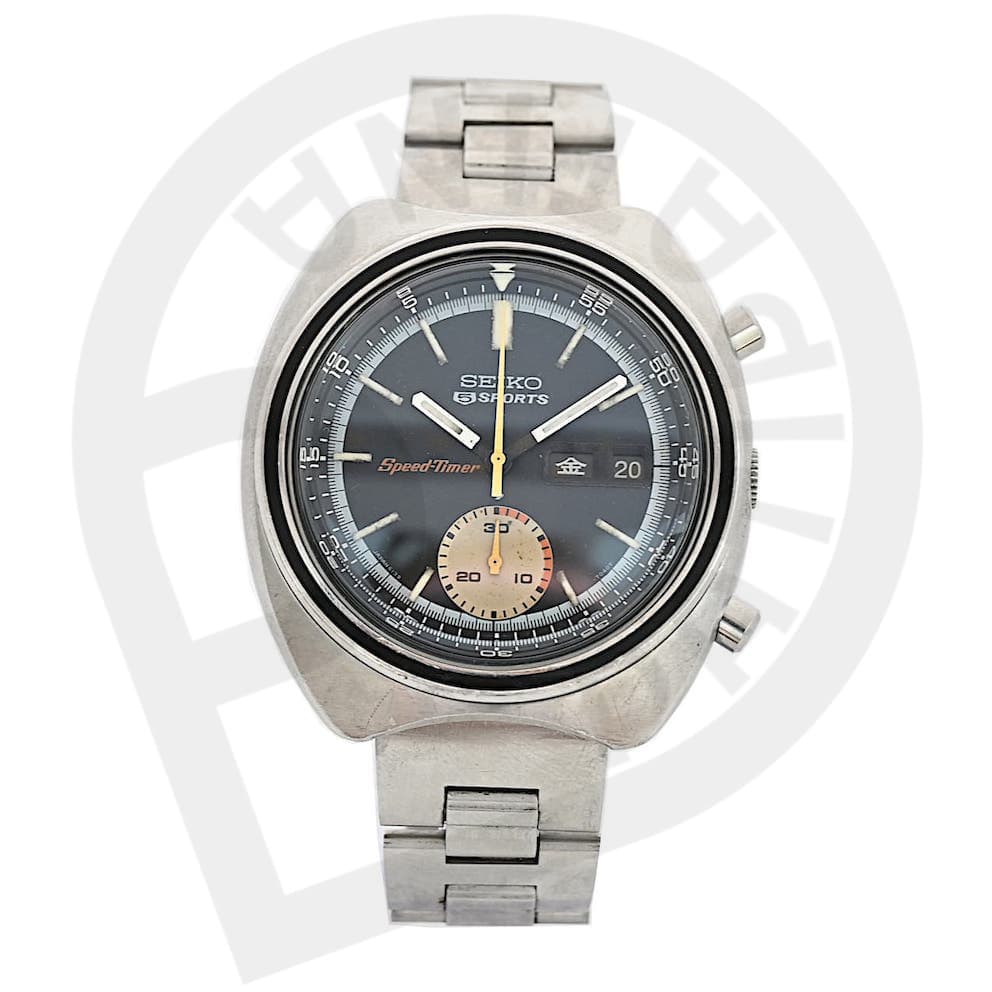
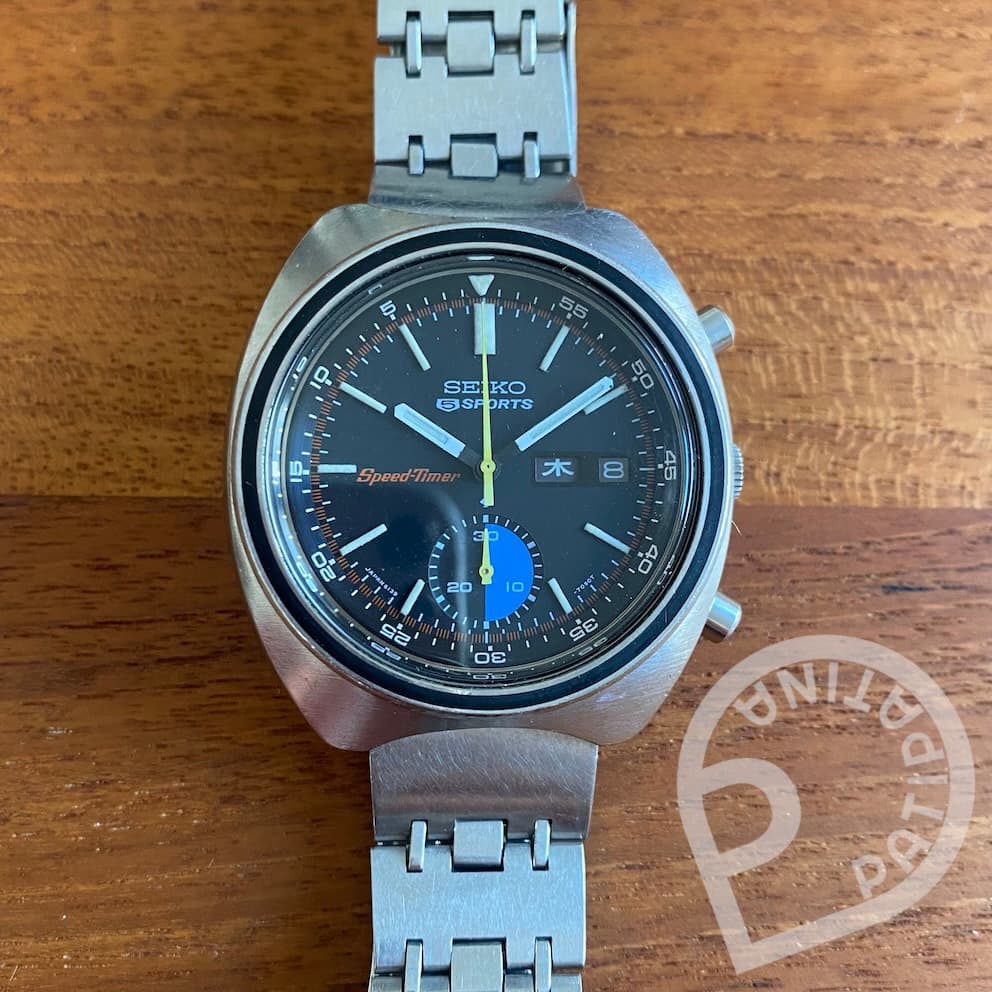
The Seiko 6139-7020 was produced with three dial variations, each with its own distinct personality.
Champagne Dial (7040T)
The champagne dial is perhaps the most elegant version. The warm metallic tone pairs beautifully with the unusual case design and creates a sophisticated yet sporty appearance.
Black Dial with Champagne Subdial (7040T)
This variant combines a black main dial with a champagne-colored chronograph register. The contrast gives the watch a distinctive visual depth and makes the subdial stand out strongly.
Black Dial with Black/Blue Subdial (7050T)
The final variant features a black dial with a dark blue-toned subdial, creating a more technical and tool-watch-like aesthetic.
There is little documented information about the relative rarity of these dial versions. For most collectors, the choice ultimately comes down to personal preference. From my perspective, the champagne dial remains the most visually appealing, followed closely by the black dial with champagne subdial.
Bracelets
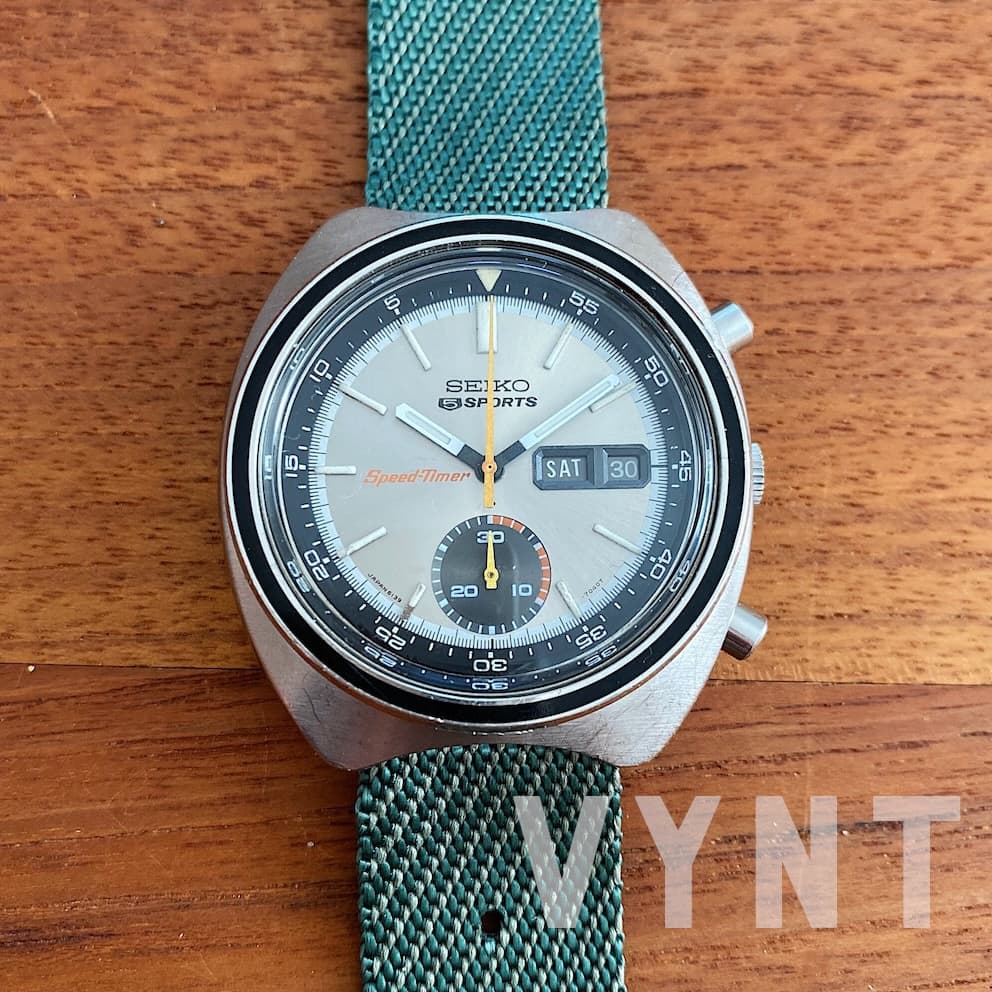
Like many vintage watches from the 1970s, original bracelets were often replaced during the 1980s and 1990s. Owners frequently swapped them for leather straps once the steel bracelets wore out or simply for stylistic reasons.
For collectors today, locating the correct bracelet reference can sometimes be more difficult than finding the watch itself.
The original bracelet references for the 6139-7020 are:
- XJA161 – used for the champagne and black/champagne dial versions
- XGA141 – used for the black/blue subdial variant
Fortunately, within Japan these bracelets were not particularly rare during the early years of collecting. Over time, however, correct examples have become increasingly difficult to locate.
Although I do own the original bracelets for my watches, I personally prefer wearing the 6139-7020 on vintage leather straps, which suit the case design surprisingly well.
Movement
The Seiko 6139-7020 is powered by the famous Seiko 6139 automatic chronograph movement. Early examples were equipped with the 6139A, while later production models received the updated 6139B. Based on information from collectors and observations within my own collection, the transition appears to have occurred around late 1971.
In my watches, all examples produced up to September 1971 still used the 6139A. Watches from October and November 1971 appear with either the A or B movement, while models from December 1971 onward consistently use the 6139B.
All 6139-7020 watches share the same general hand configuration:
- yellow chronograph seconds hand
- black and white hour and minute hands
Together with the distinctive case design and colorful dial options, the watch offers a very recognizable appearance within the 6139 family.
Final Thoughts
The Seiko 6139-7020 is one of the most visually distinctive chronographs produced by Seiko during the early 1970s.
Its unusual case design, Japan-only release, and limited number of dial variations make it a particularly rewarding reference for collectors who enjoy exploring the diversity of the 6139 chronograph series.
Whether you prefer the refined champagne dial or one of the darker sportier versions, the 7020 remains a fascinating piece of Seiko’s experimental design period.
If you are currently looking for one, you can also check whether I have a Seiko 6139-7020 available from my collection.